Wet stacking
Risk: lost power and failure
Unburned fuel builds up in diesel engines that run lightly loaded.
How we fix it: sustained load burns it off

Load bank testing runs your generator at real load to prove it can carry your building, burns off wet stacking and documents NFPA 110 load testing. Serving healthcare, commercial and industrial facilities across Central Florida since 1990.
1990
Serving Florida
NFPA 110
Load testing
24/7
Emergency service
24/7 emergency service
Serving Central Florida since 1990
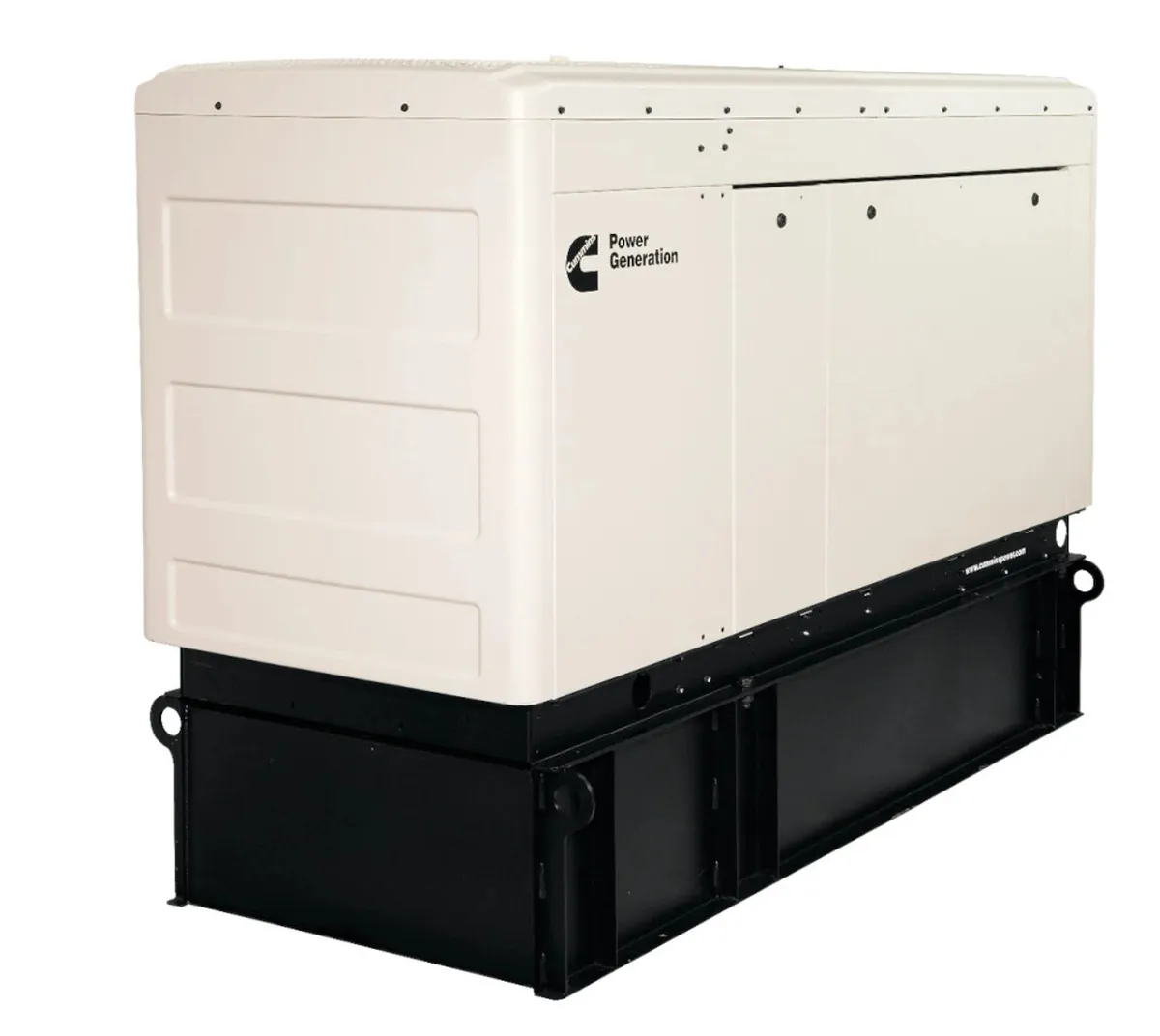
Most standby generators exercise with little or no building load. That proves the engine starts, not that it can deliver full power for hours during an outage.
Diesel engines that run lightly loaded also build up unburned fuel and carbon in the exhaust, known as wet stacking. Over time it reduces power and can lead to failure when the generator finally has to work.
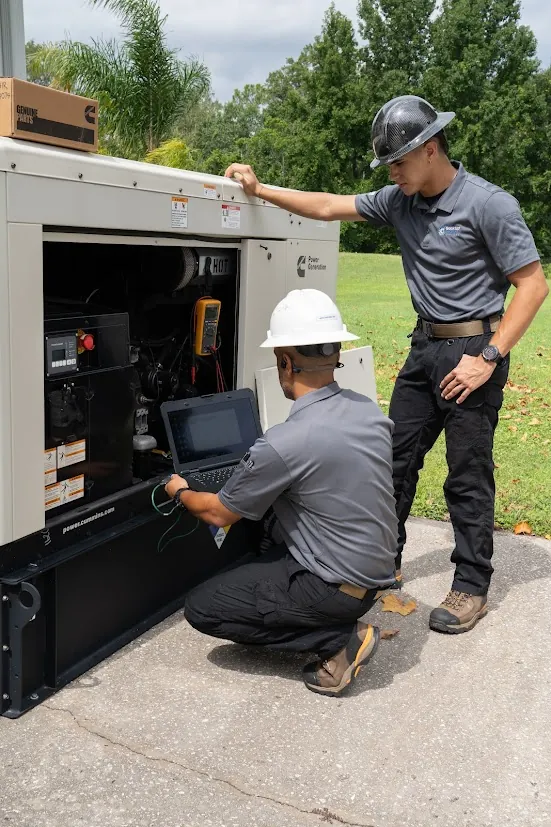
A load bank test applies a controlled electrical load in steps, so we can see how your generator performs at real capacity while your building stays on utility power.
Five problems that stay hidden during no-load exercise and show up under real load.
Risk: lost power and failure
Unburned fuel builds up in diesel engines that run lightly loaded.
How we fix it: sustained load burns it off
Risk: shutdown under load
Cooling problems appear only when the engine works hard.
How we fix it: temperatures watched at every step
Risk: damaged equipment
Unstable output can harm sensitive loads when power transfers.
How we fix it: readings recorded at each step
Risk: starving at full load
Clogged filters may pass at idle but restrict fuel under load.
How we fix it: pre-test fuel system inspection
Risk: an NFPA 110 finding
Without a load test report, there is no record your system can carry the load.
How we fix it: a written test report
Check every statement that applies to your generator. In thirty seconds you will know if a load bank test belongs on your schedule.
Schedule a load bank testA complete load bank test for your standby generator: inspection before, controlled step loading, live monitoring and a written report for your records.
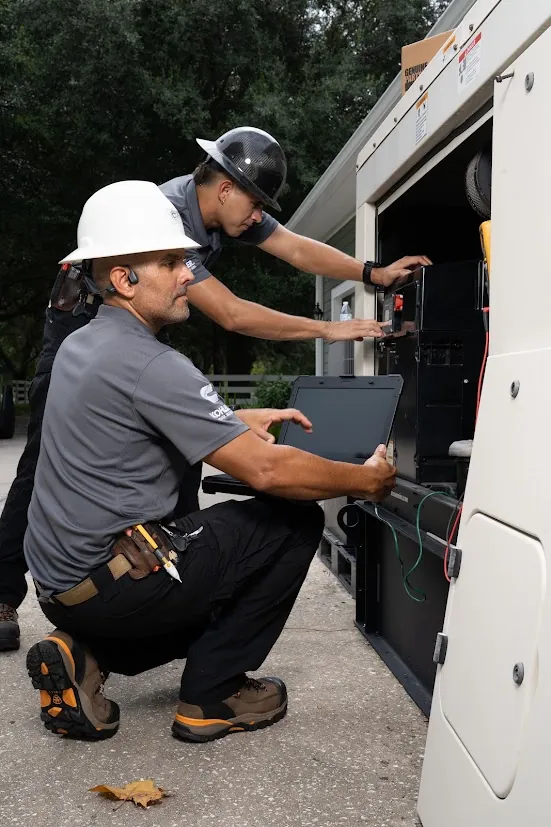
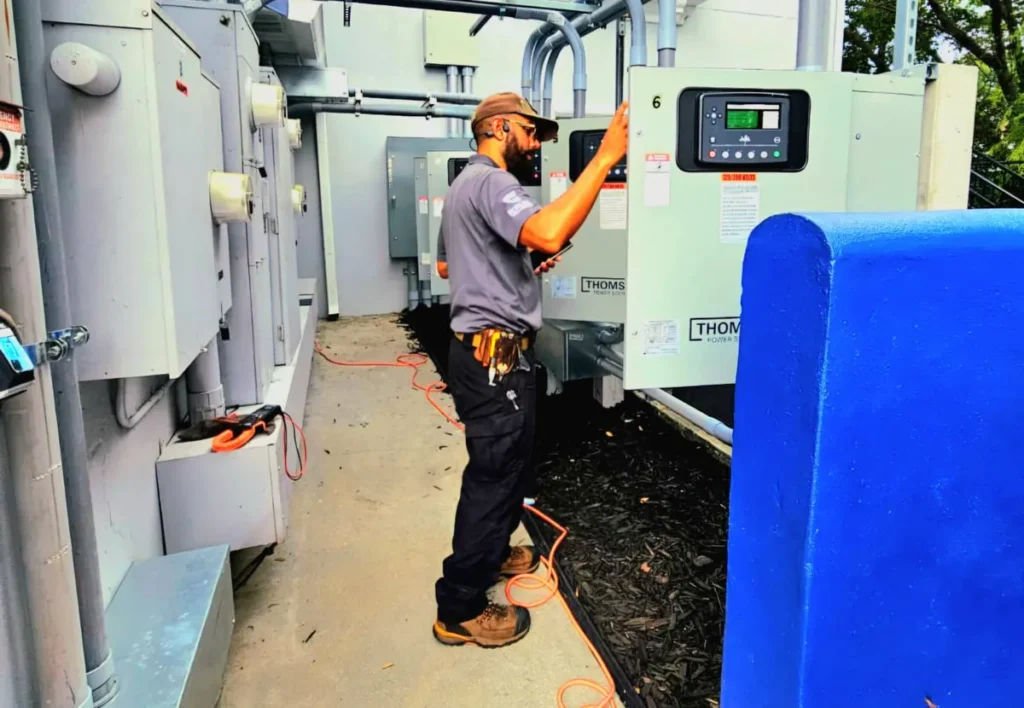
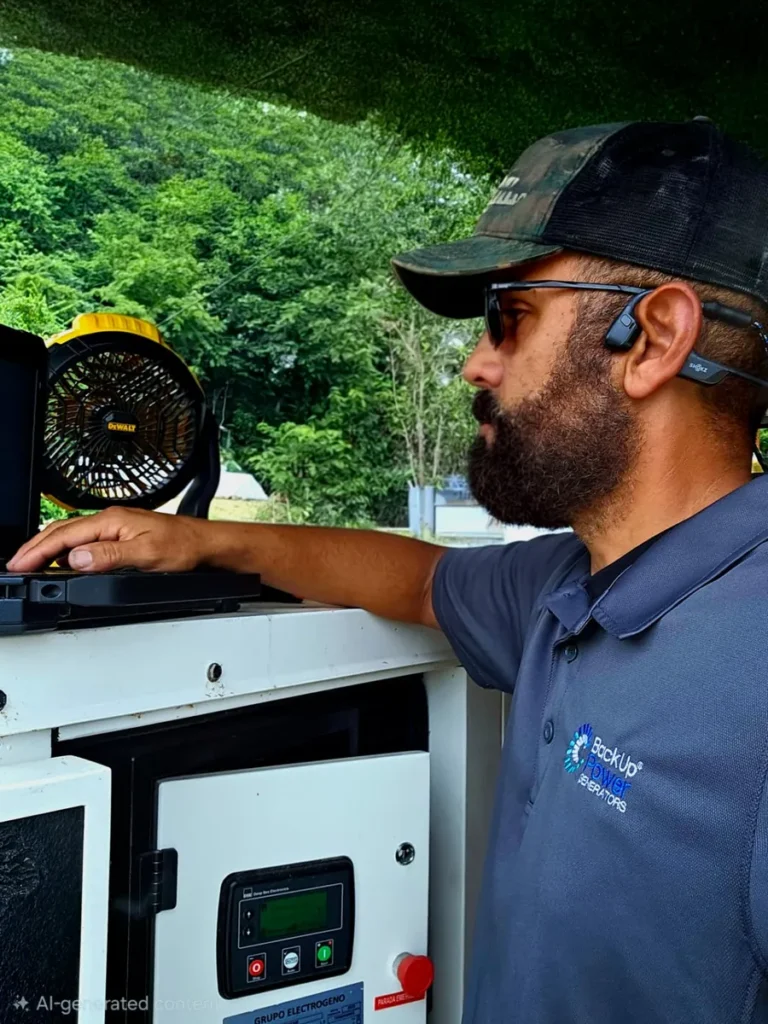
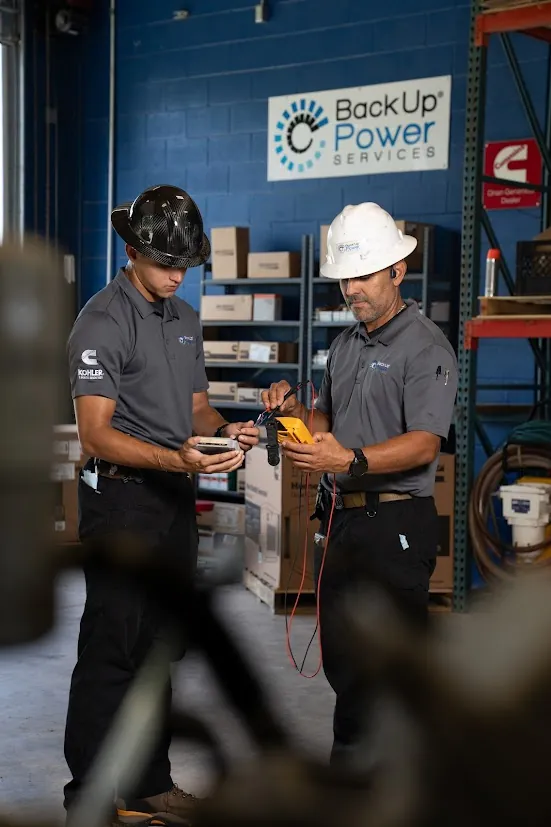
Most tests take a few hours, and your building stays on utility power the whole time. You receive a written report with the readings at each step.
Hospitals and surgery centers
Nursing homes and assisted living
Data centers and telecom sites
Commercial and industrial facilities
Kohler, authorized dealer
Generac, authorized dealer
Cummins, authorized dealer
Thomson Power Systems
Orlando and Sanford
Leesburg and Clermont
Kissimmee and Lake Mary
Winter Park and Apopka
How long does a load bank test take?
Most tests take a few hours, depending on the size of the generator and the test required. We schedule them to keep disruption to your facility to a minimum.
Will my building lose power during the test?
No. The load bank connects to the generator, so your building stays on utility power while we test.
How often should a generator be load bank tested?
Many facilities test once a year. We recommend a schedule based on how your generator is used and the requirements that apply to it.
What is wet stacking?
Wet stacking is unburned fuel and carbon that build up in a diesel engine's exhaust when it runs at light load. Running it at higher load during a load bank test helps burn it off.
Does NFPA 110 require load bank testing?
For emergency power systems, NFPA 110 calls for an annual load test when the monthly exercise does not reach the required load. A load bank test is the standard way to complete it.
Do you provide a report after the test?
Yes. You receive a written report with the readings at each load step and our recommendations, ready for your maintenance records.
Can you test any generator brand?
Yes. We test Kohler, Generac and Cummins generators as an authorized dealer, plus most other major brands.
What areas do you serve?
We perform load bank testing across Central Florida, including Orange, Seminole, Lake and Osceola counties.
Tell us your generator size and location, and we will schedule a test that fits your operation.